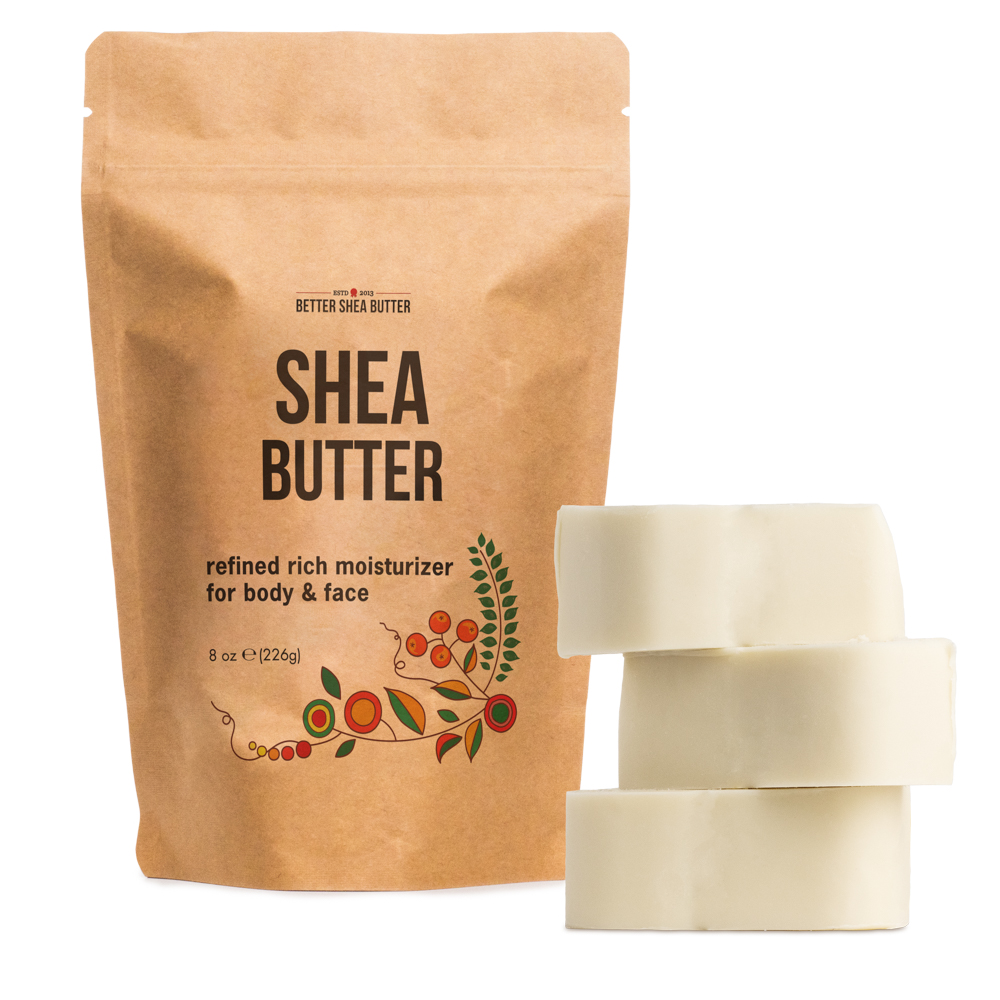
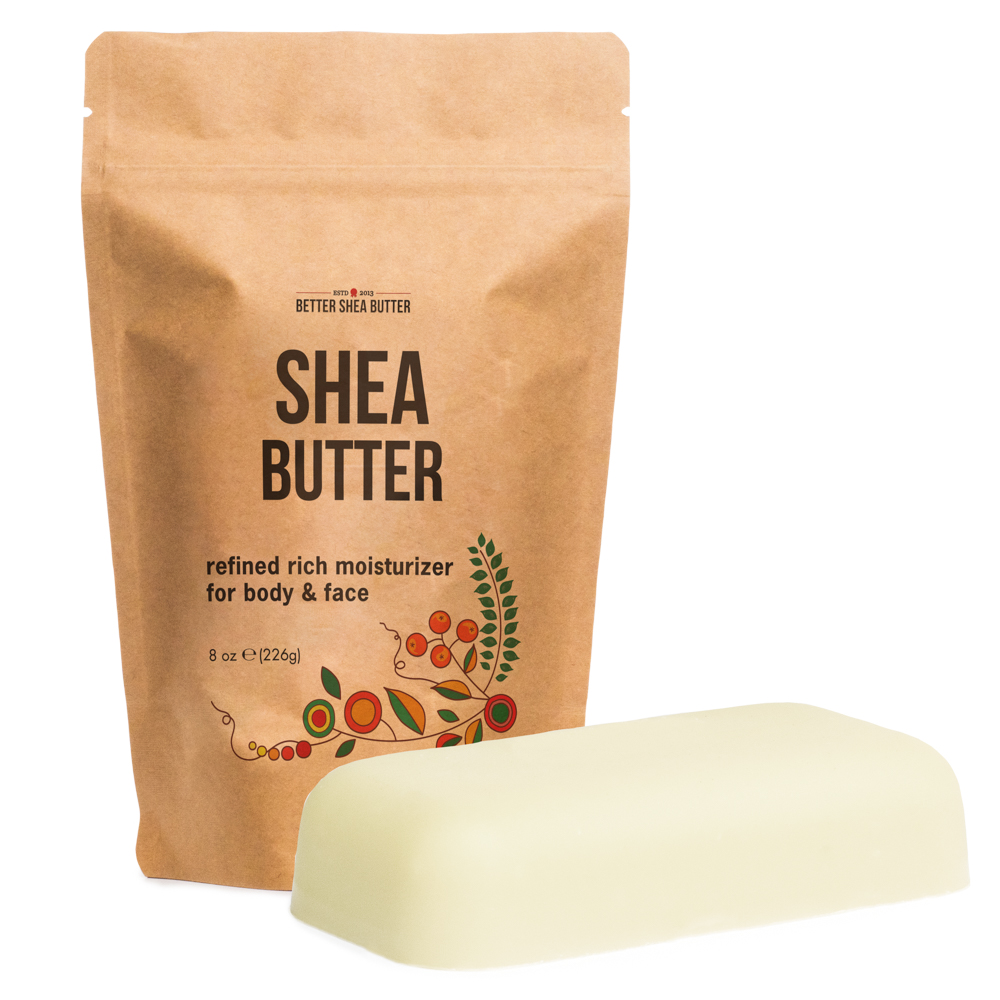
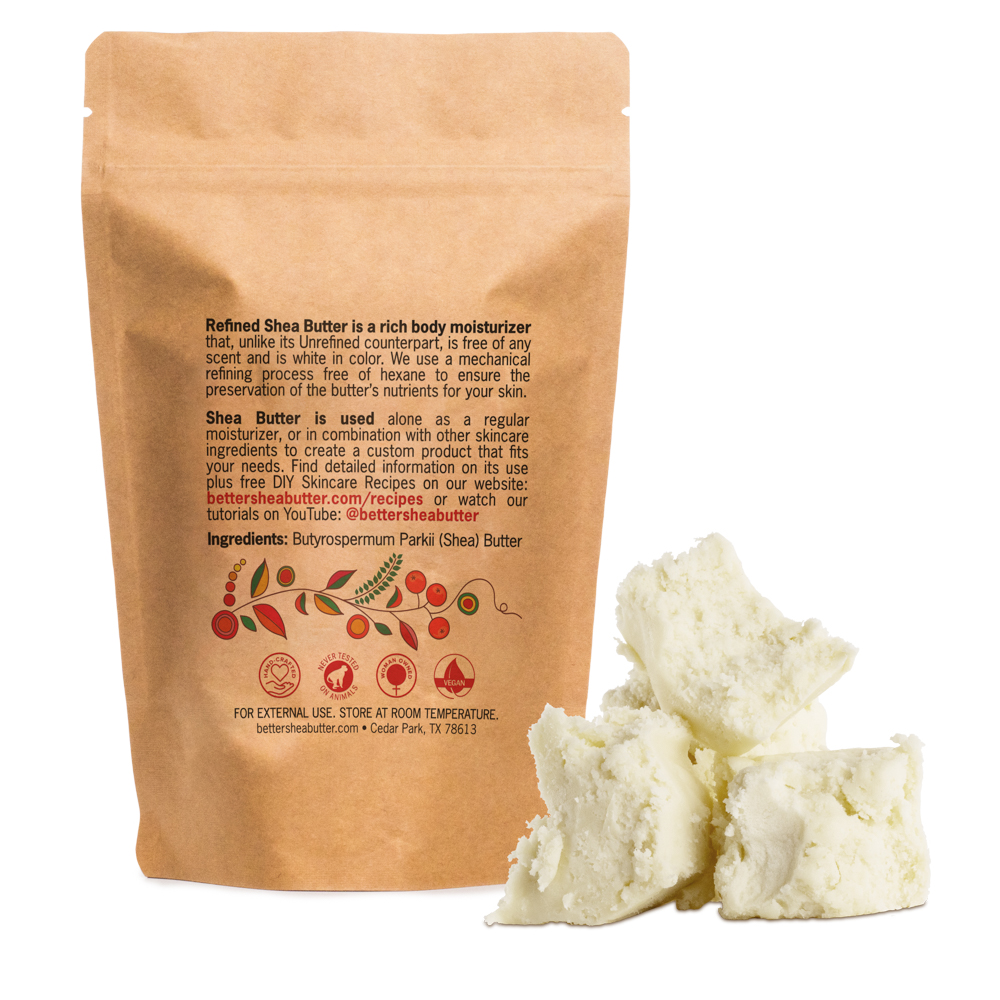
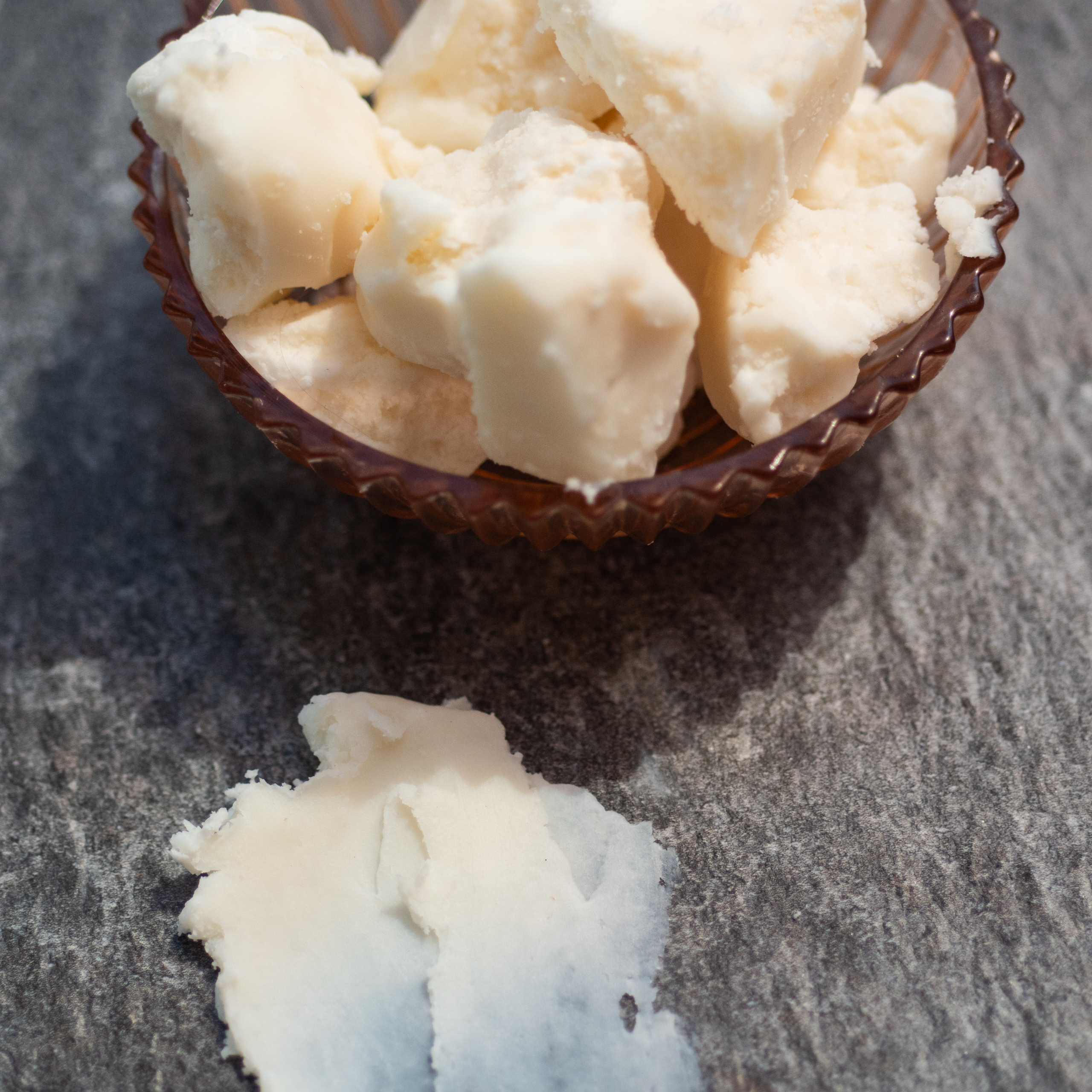
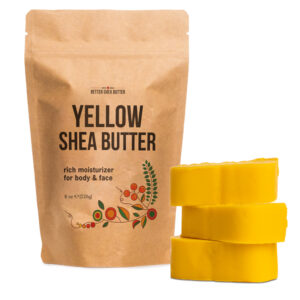
Refined shea butter gives you all the same fatty acids and vitamins as raw shea butter, just without the scent or color. That makes it the cleaner starting point for DIY products or unscented routines. The refinement process uses no solvents or bleach (washing, mechanical filtering, and deodorizing) so the fatty acids and vitamins stay intact.
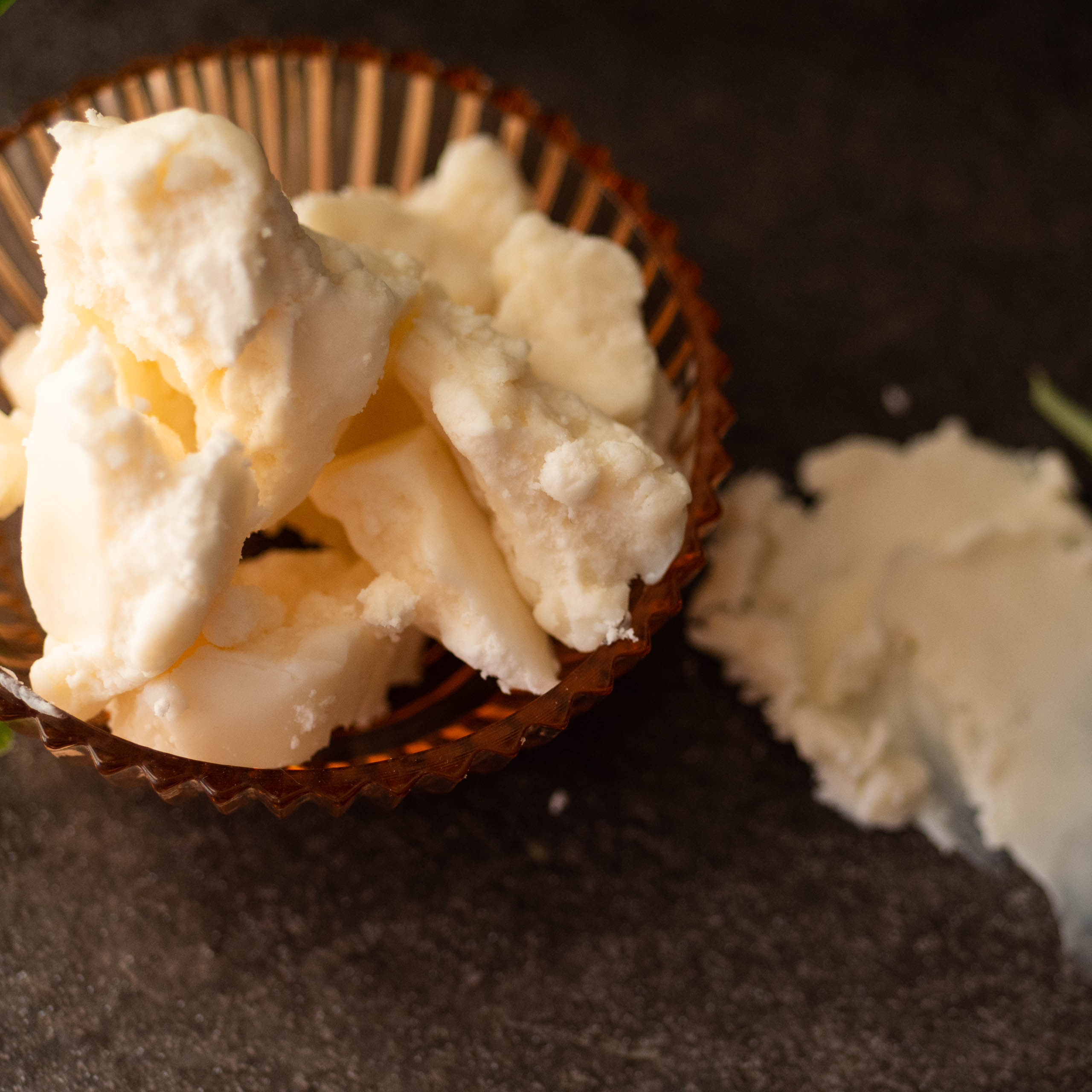
On skin, it behaves like real African shea butter should. It melts on contact, absorbs without leaving a greasy layer, and works on dry, itchy, or cracked skin. Use it on the face to help with dark spots, blemishes, and fine lines. Use it on the scalp to lock in moisture and tame frizz. It’s vegan and safe for all skin types.
Refined and unrefined shea butter are closer than most people think. The difference is that refined goes through a cleaning process to strip out the natural scent and color that raw shea butter carries. What matters is how that’s done. A lot of commercially refined shea butter uses chemical solvents or bleach, which can leave residue in the finished product and strip out the good stuff along with the odor.
This one doesn’t. The refinement process here is mechanical: the butter is washed to remove debris, filtered to clear out particles, and deodorized to remove the scent. No solvents, no bleach, no chemical residue. The fatty acids and lipids from the shea nuts come through largely undisturbed, which is why it performs closely to an unrefined butter on skin and hair.
It comes from the Shea Tree (Vitellaria Paradoxa) in Ghana; the same tree that’s been used across West Africa for generations, sometimes called the “Tree of Life” for how widely it was used to heal and protect skin. The nuts are cold-pressed into butter that’s rich in Vitamins A and E, essential fatty acids, and antioxidants that help skin repair itself over time.
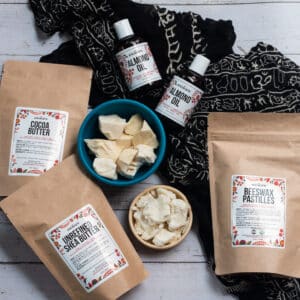
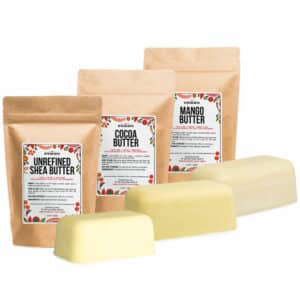
For skin, it moisturizes deeply, helps even out skin tone, and works on dark spots, fine lines, and blemishes with consistent use. For hair and scalp, it locks in moisture, reduces frizz, and keeps the scalp conditioned. Because it’s unscented and white, it’s also a clean base for DIY formulations. Easier to scent or tint than raw shea butter without the natural odor competing with whatever you’re adding.
It melts on contact with warm skin, so a small amount goes further than expected.
Shea butter is made from shea nuts. If you have a nut allergy, we recommend browsing our other cosmetic butters.
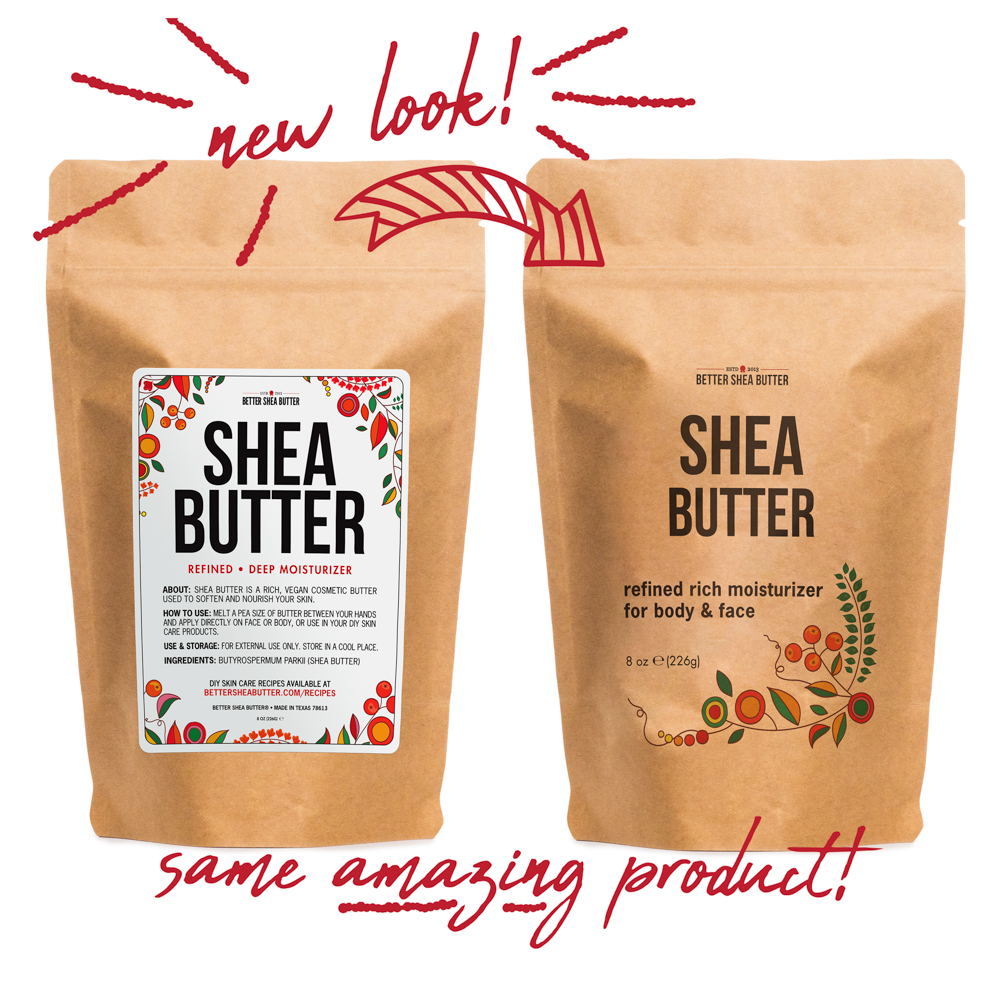
Weight: 8 oz | Melting Point: 89–100°F
Melt a pea size amount of the butter between your hands and apply to your face or body. You may also mix this into homemade skin and hair care products.
In addition, you can use Shea Butter as a scalp treatment to moisturize the scalp and stimulate hair growth. It can also be used as a hair serum to tame frizzy hair and lock in moisture. For scalp: ensure scalp is damp, then melt a small amount of shea butter in your hands, and massage into the scalp. For a serum, dampen the hair, then melt a small amount of shea butter in your hands and scrunch it into or run it over your hair.
When not in use store Shea Butter sealed in its original packaging, or in a container such as a jar with a lid. Keep in a cool dry place, away from direct sunlight. If temperatures are above 75 degrees Fahrenheit, store in the fridge.
Butyrospermum Parkii (Shea Butter)
We hand pick our products carefully and ensure they are of the highest quality and pure. For this reason we stand behind our products and guarantee them 100%. If for some reason you are unhappy with your purchase please contact us as soon as possible so we can help get this resolved.
FDA & Allergen Disclaimer
These statements and products have not been evaluated by the FDA. These statements do not intend to diagnose, treat, cure, prevent, or eliminate any disease or condition. Better Shea Butter & Skin Foods products are only for cosmetics purposes, so do not ingest them.
Please consult a physician before using products from Better Shea Butter & Skin Foods. If you are allergic to any ingredients, please do not purchase or use. Use a small 1”x 1” inch test area on your hand; let product sit on the skin for 24 hours to test for any adverse reactions. If any reactions occur, consult a physician immediately, and immediately discontinue use.